2025
SelfProject
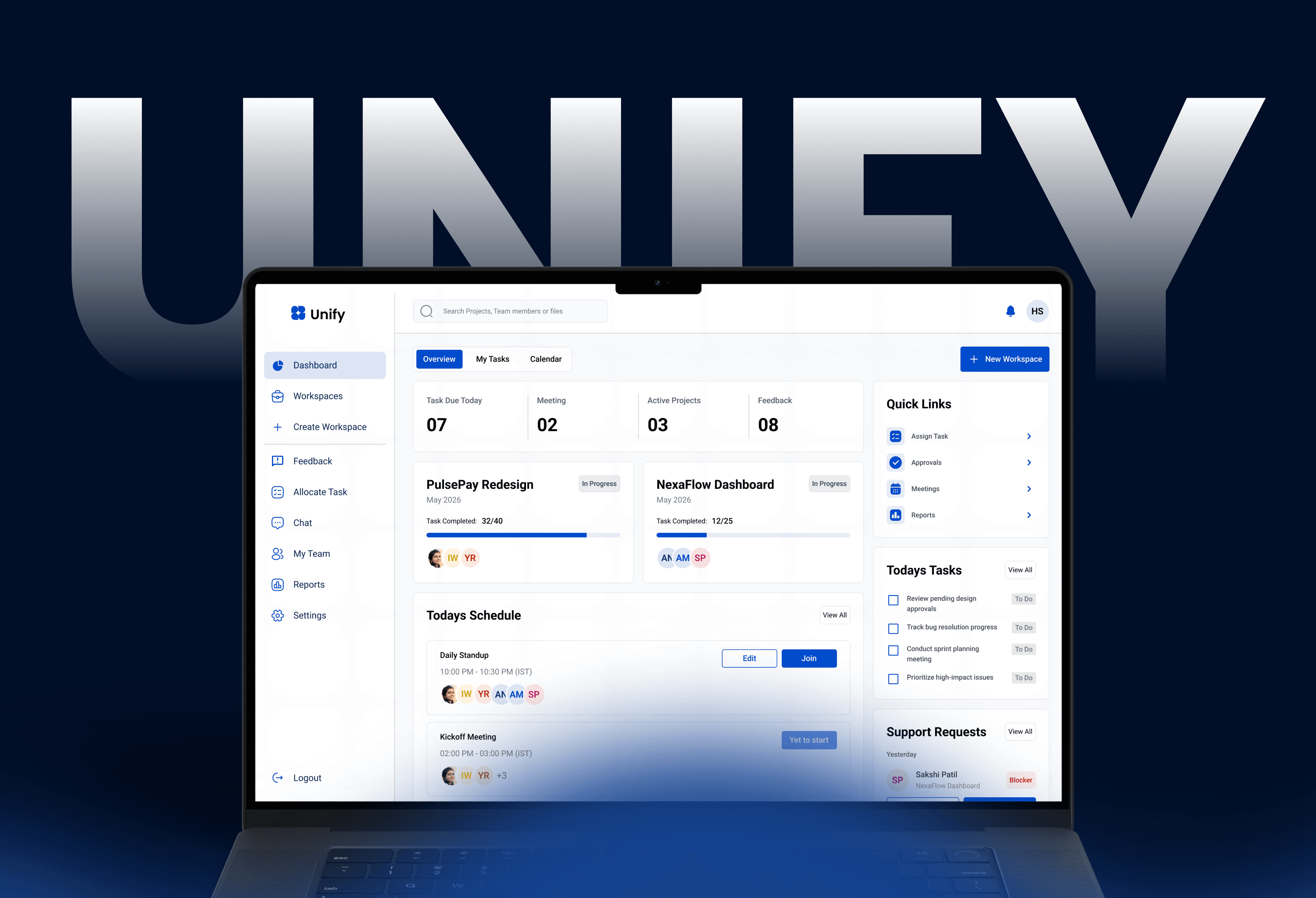
Unify (One workspace. Zero context Loss)
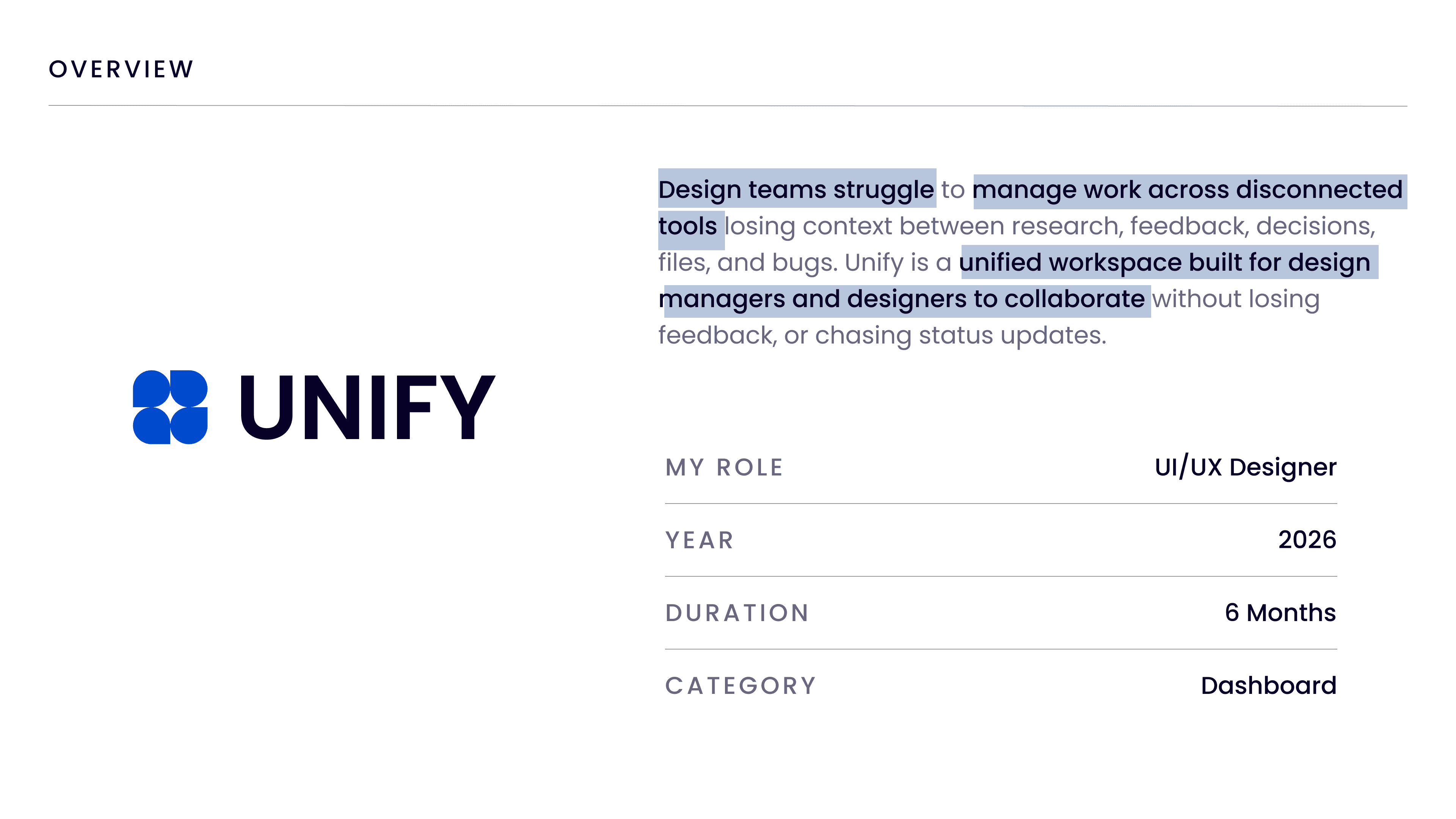
A unified workspace that connects research, design decisions, feedback, bugs, and files, eliminating context loss across fragmented toolchains.
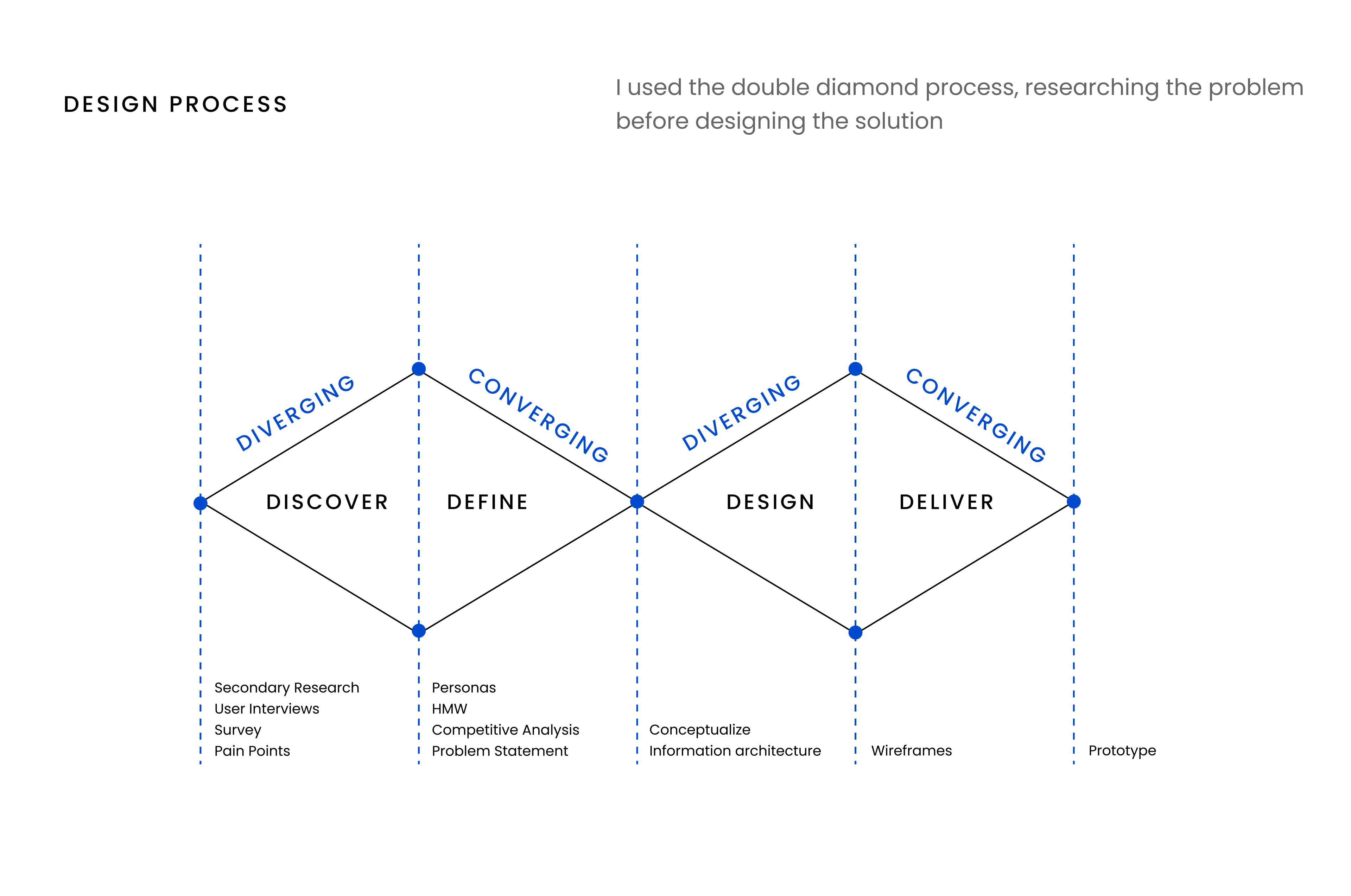
Discover
To understand the problem space, I conducted secondary research along with surveys and semi-structured interviews involving
design managers and designers. This approach helped uncover real workflow challenges and ensured the problem was defined
based on user insights rather than assumptions.
Understanding the problem space through secondary research, a survey, and semi-structured interviews with design managers and designers. My goal was to let the data define the problem, not assumptions.
Secondary Research Findings
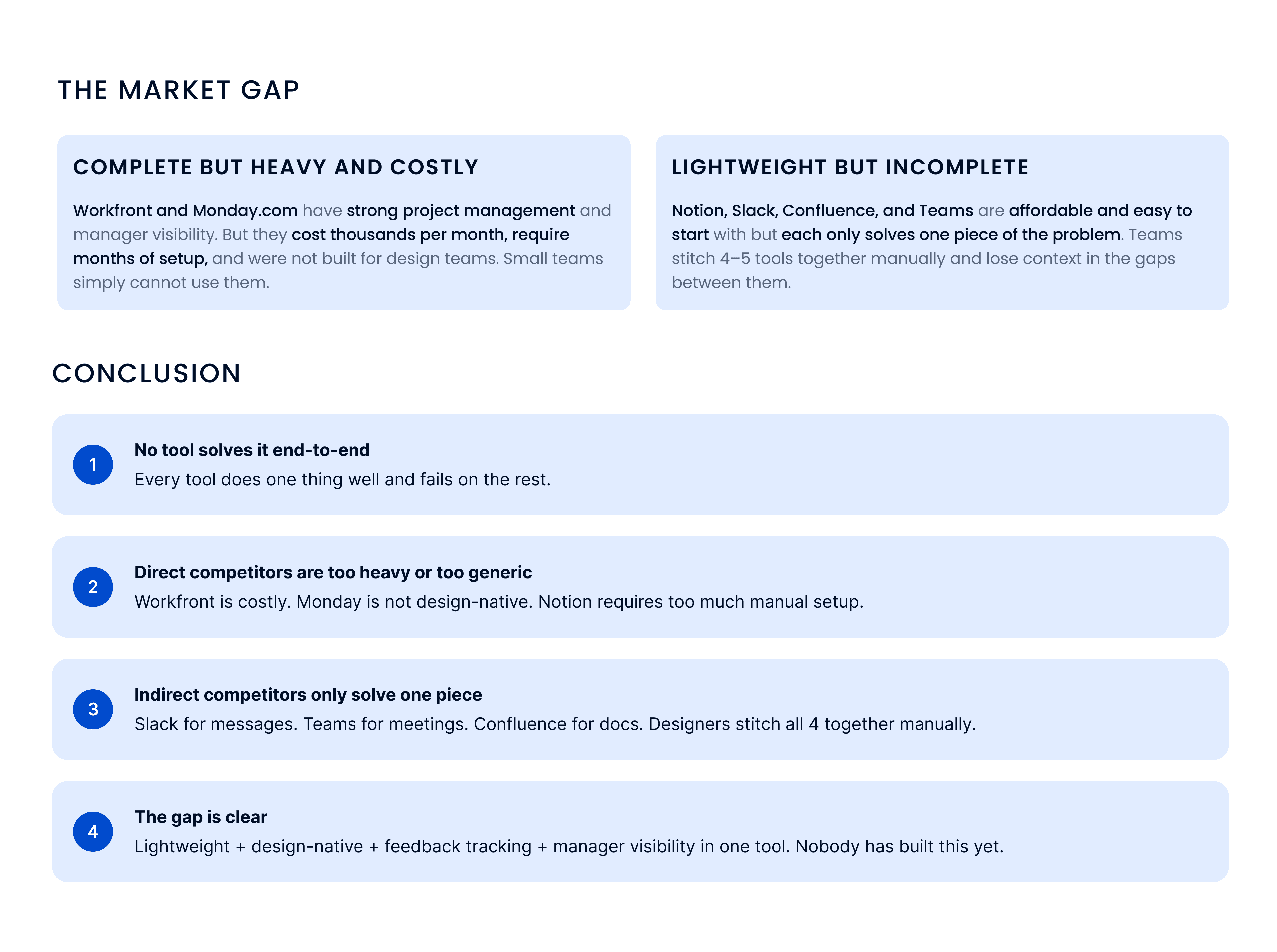
Nielsen Norman Group (2023): design teams average 6.2 tools per workflow, up from 3.8 in 2019
Figma State of Design (2024): 71% of designers report "feedback getting lost" as their top pain point
McKinsey on productivity: knowledge workers spend 19% of time searching for information across tools
Atlassian report: teams with fragmented toolchains have 31% longer time-to-ship than integrated ones
Common tool stack in design teams (observed patterns)
Research: Notion, Dovetail, Google Docs — siloed from design files
Design: Figma, Sketch — not connected to research or decision logs
Feedback: Loom, Slack threads, email — ephemeral, unsearchable
Design Bug tracking: Jira, Linear — connected to design asset but not updated by developers
Documentation: Confluence, Notion — rarely updated after decisions are made
Primary Research (User Interviews)
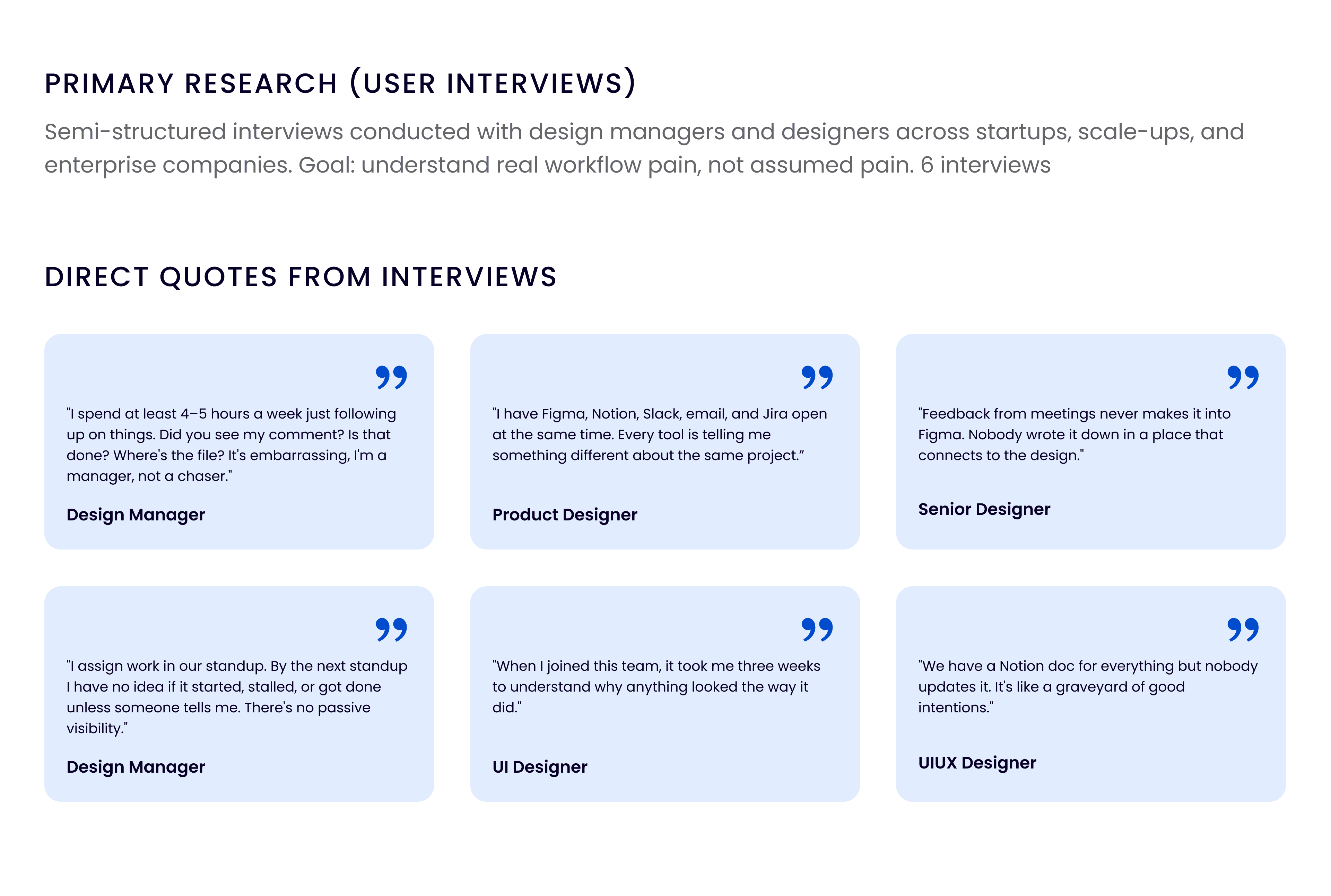
Semi-structured interviews conducted with design managers and designers across startups, scale-ups, and enterprise companies. Goal: understand real workflow pain, not assumed pain.

Direct quotes from interviews

Key numbers from interviews

Survey Findings

Key insights from survey

3 strongest findings to call out:
1. Feedback is everywhere but nowhere — 100% use Figma comments, but 71% also get feedback in meetings, 57% via email. No one place owns it.
2. Managers are flying blind — 57% track progress through status meetings only. No automated visibility. This directly validates your manager persona.
3. Manual overhead is the #1 blocker — 57% say updating task statuses slows them down most, and the open-ended answers keep coming back to "manual work", "feedback loop", and "context explanation".
Define
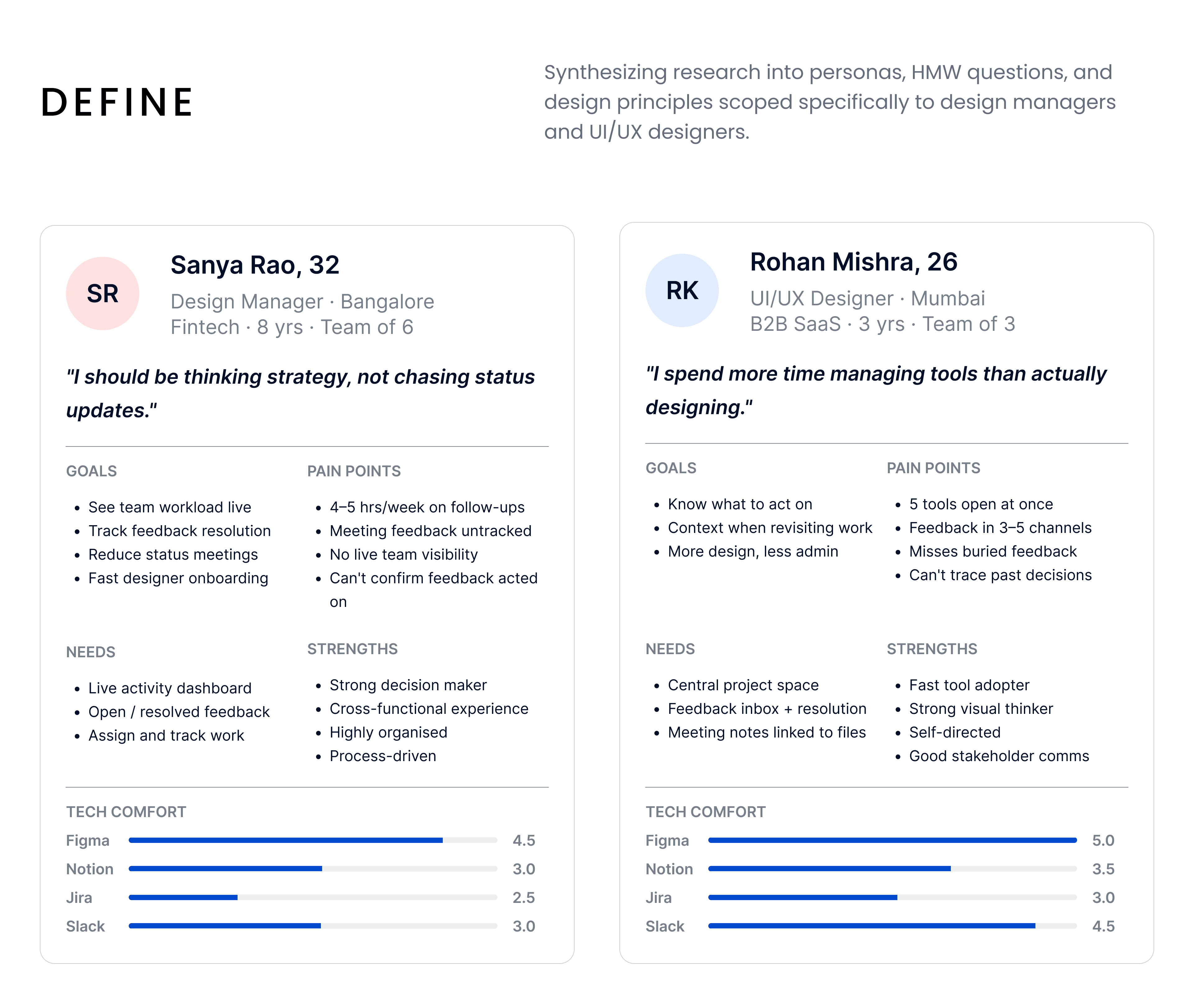
Synthesising research into two personas, a focused problem statement, HMW questions, and design principles
scoped specifically to design managers and UI/UX designers.
User Persona
The Define phase synthesized my research findings into clear opportunity areas, design principles, and “How Might We” statements that guided all subsequent design decisions
Problem Statement
Design teams lose critical context across the full design lifecycle because research, decisions, feedback, files, and bugs live in disconnected tools with no single source of truth.
Core problem
A unified workspace built exclusively for design teams that connects files, decisions, feedback, bugs, and progress tracking in one context-aware environment, so teams spend less time managing work and more time doing it.
How Might We Statements
Lifecycle continuity — How might we keep research, decisions, and files connected across every stage of the design lifecycle?
Context preservation — How might we preserve design rationale so it never has to be reconstructed from memory?
Feedback unification — How might we bring all feedback into a single version-linked thread regardless of where it originated?
Manager visibility — How might we give managers real-time project visibility without adding reporting burden to designers?
Onboarding — How might we let a new team member understand the full project history on their first day?
Bug traceability — How might we link every bug report directly to the design file and version it was built from?
Core problem
A unified workspace built exclusively for design teams that connects files, decisions, feedback, bugs, and progress tracking in one context-aware environment, so teams spend less time managing work and more time doing it.